
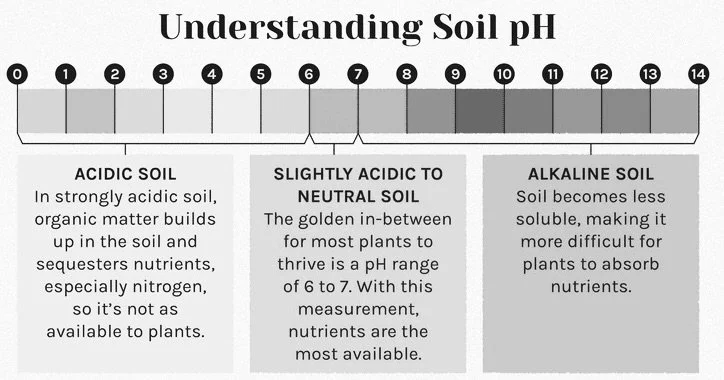
Soil pH measures how acidic or alkaline your soil is on a scale from 0 to 14, with 7 being neutral. In plant life, pH plays a critical "gatekeeper" role because it strongly influences how easily plants can absorb essential elements from the soil, even if those nutrients are present in sufficient quantities.
Why pH Matters for Plant Health
Important macronutrients (like nitrogen, phosphorus, potassium) and micronutrients (like iron, manganese, zinc) are most available to plants in a slightly acidic to neutral range (roughly pH 6.0–7.5). Outside this window, nutrients can "lock up" and become unavailable, leading to deficiencies. For example:
In alkaline soils (pH above 7.5–8.0), iron, manganese, zinc, and phosphorus often become insoluble, causing issues like iron chlorosis (yellowing leaves with green veins, common in turf and certain trees/shrubs).
Microbial activity: Beneficial soil microbes (which help decompose organic matter, cycle nutrients, and suppress some diseases) thrive best in slightly acidic to neutral conditions. Extreme pH can slow these processes or favor harmful pathogens.
Root growth and overall vigor: Improper pH stresses roots, reduces water/nutrient absorption, weakens plants, and makes them more susceptible to drought, pests, diseases, and weeds. In lawns, this often shows as thinning, patchy turf, poor color, or slow recovery from aeration or stress.
Addressing Utah Alkaline soils: Symptoms include yellowing (chlorosis) from iron/manganese shortage, poor phosphorus uptake, and weak growth.
1.Use elemental sulfur, acidifying fertilizers, or organic matter (like pine needles or peat) to gradually lower pH. For severe cases or specific plants, chelated iron supplements help short-term.
2. Gypsum (calcium sulfate) helps prevent clay from solidifying and also helps wash away sodium and lowers pH.